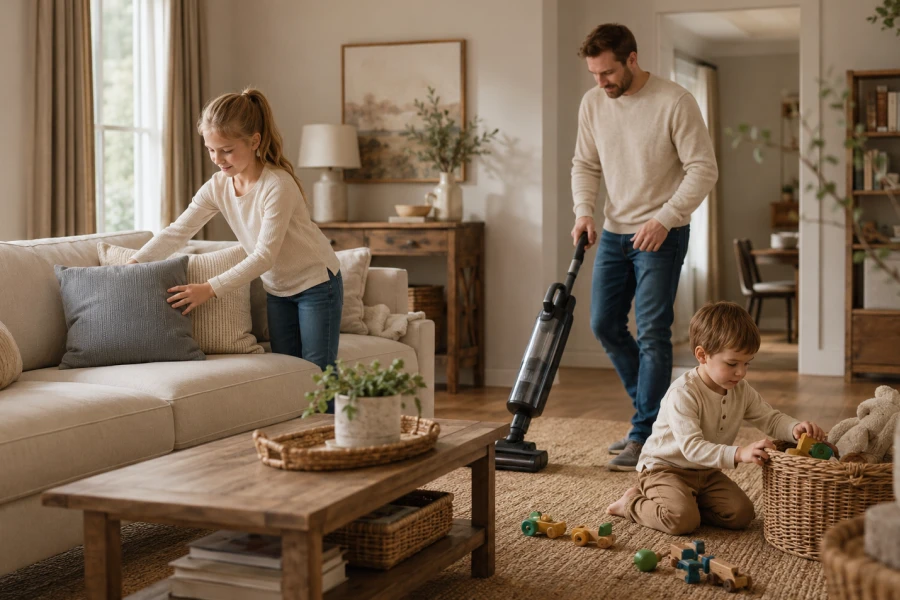
Home should feel like a place people recover. Yet clutter and unfinished tasks can make it feel tense. A family chore routine gives everyone a clearer rhythm. It helps chores move from random reminders into predictable habits. The routine does not need to feel strict. It should feel visible, fair, and repeatable. Families need a system that survives busy mornings. They also need one that survives tired evenings. Small patterns can change the whole atmosphere. A lighter home often begins with shared rhythm.
Nagging usually appears when systems are missing. One person notices the mess. Another person feels criticized. The cycle repeats until everyone feels annoyed. A practical shared household calendar moves the reminder outside one person’s voice. That shift matters emotionally. The task belongs to the plan, not the parent’s frustration. People can check expectations independently. Children gain more autonomy. Partners avoid guessing what needs attention. The routine becomes a neutral reference point. Peace grows when reminders feel less personal.
Every household has high-energy and low-energy windows. Some families work best after dinner. Others need quick morning resets. A routine should match those patterns. Forcing chores into the wrong time creates resistance. Start by observing natural rhythms. Notice when people move fastest. Notice when conflict rises. Choose small tasks for tired periods. Save bigger tasks for stronger windows. A useful routine respects energy instead of fighting it.
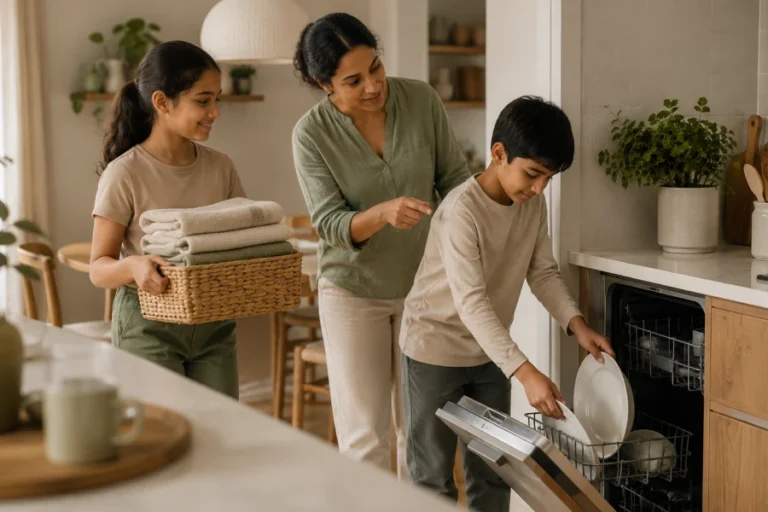
Children participate better when expectations feel concrete. Vague requests create confusion. Specific tasks create confidence. A simple age-appropriate chores list can reduce arguments. Younger kids may handle toys, socks, or napkins. Older kids may manage dishes, trash, or laundry steps. Teens can own larger responsibilities with clear deadlines. Parents should teach before expecting independence. Demonstration prevents many mistakes. Follow-up should encourage growth, not shame. Skills develop through repetition and trust.
A shared routine should not punish the most observant person. It should distribute noticing, planning, and doing. That means assigning responsibility for whole outcomes. One person may own bathroom restocking. Another may own kitchen reset. Someone else may own laundry movement. A clear mental load solution helps families discuss more than visible chores. Planning counts too. Remembering counts too. Tracking supplies counts too. When families include those tasks, fairness becomes more honest.
Busy weeks should not destroy the routine. They should trigger a smaller version. Family chore routine planning works best with minimum standards. A kitchen may need counters cleared. Laundry may only need sorting. Floors may wait until the weekend. This approach prevents all-or-nothing thinking. Families keep momentum without demanding perfection. A lighter version also reduces guilt. Everyone knows which tasks protect basic function. When life calms down, the fuller routine returns. Flexibility keeps the system trustworthy.
The deepest benefit is not a cleaner room. It is a different family story. Everyone contributes because everyone belongs. Work becomes part of care. A thoughtful teamwork at home resource can help families build that story. Appreciation should become visible too. Thank people for effort. Notice follow-through. Repair mistakes quickly. A strong household culture teaches responsibility without constant conflict. Over time, the home feels less heavy because the work no longer rests on one person.



Leave a comment