
Family stress often hides inside tasks nobody names. Someone remembers the wipes, the appointments, the meals, and the laundry. Someone else may help when asked but rarely notices first. A household responsibility plan changes that pattern. It gives the family a shared map of work. The map includes chores, planning, reminders, and follow-through. Parents can stop carrying every detail alone. Partners can see where support matters most. Children can learn contribution as a normal habit. The home becomes more honest about what care requires.
Responsibility talks can become emotional very quickly. People hear criticism even when someone asks for balance. Calm timing helps the conversation stay useful. A practical stress-free chore planning process starts when no one feels rushed. Families should avoid starting during an argument. They should review tasks with curiosity. Who notices this task now. Who completes it most often. Which steps happen before anyone sees the result. These questions reveal workload without blame.
Home management includes more than cleaning. It includes anticipation, timing, shopping, sorting, and emotional repair. Parents often underestimate how much they coordinate. A plan helps separate tasks into visible parts. Dinner involves planning, buying, cooking, serving, and cleanup. Laundry involves gathering, washing, drying, folding, and returning. School mornings involve supplies, clothes, food, and timing. Once families see the full shape, they delegate more fairly. The work becomes easier to divide. It also becomes easier to appreciate.
Accountability works best when expectations are clear. A strong home accountability system names the owner and the outcome. It also names the timing. That prevents vague promises from disappearing. Families can review progress without turning every miss into a fight. The plan should include what happens when tasks slip. Maybe someone swaps duties. Maybe the task moves to another day. Accountability should restore function. It should not create shame as the main motivator.
Fair does not always mean identical. A parent working late may need different tasks. A child with homework may need shorter duties. A partner handling morning drop-off may own fewer evening chores. Capacity changes throughout the week. Families should discuss those changes honestly. A helpful family balance tool supports fairness with flexibility. The goal is shared responsibility, not mathematical sameness. People feel more willing when the plan respects reality. Balance grows through regular adjustment.
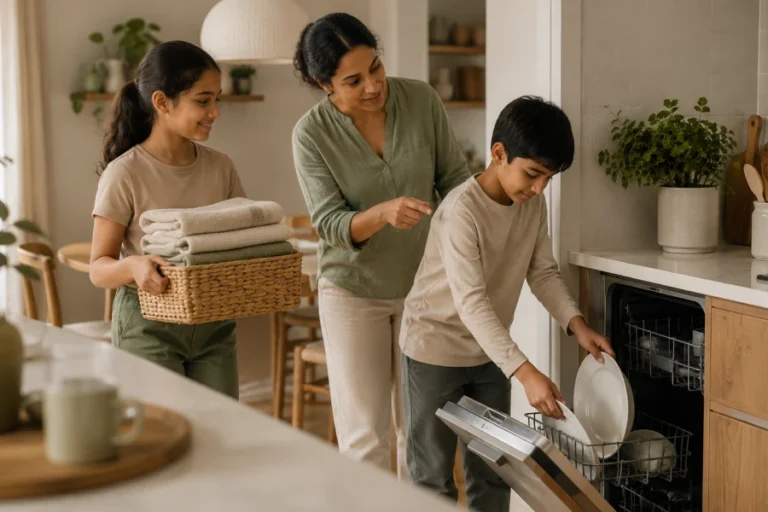
Children learn from the way adults describe work. If chores sound like punishment, kids resist. If contribution sounds like belonging, kids engage more easily. Household responsibility plan conversations can teach both skill and empathy. Children see that homes require care. They learn that adults need help too. Start with small duties. Add responsibility as confidence grows. Keep instructions simple. Praise follow-through when it appears. Over time, contribution becomes part of identity.
A plan hidden in a notebook rarely changes behavior. Families need visibility where daily life happens. A fridge chart, phone reminder, or shared calendar can help. A supportive organized family home approach keeps the plan easy to revisit. Weekly reviews should stay brief. Celebrate what improved. Fix what felt unclear. Remove tasks that no longer matter. Add new ones as life changes. Responsibility becomes sustainable when the system stays practical, visible, and kind.



Leave a comment