
Children change the emotional weather inside a relationship. Love may remain strong, yet attention becomes scattered. Staying connected with your partner requires intention during ordinary moments. It does not depend on perfect date nights. It grows through small signals that say, I still see you. Parents need practical ways to protect closeness while raising children. They also need language for tired seasons. Connection can survive noise, schedules, and interrupted sleep. It simply needs regular care. The partnership deserves a place in family life.
Small rituals work because busy parents can actually keep them. A hug before the morning rush matters. A check-in after bedtime matters too. A practical relationship routine for parents turns affection into something repeatable. It also removes pressure from grand gestures. Couples can choose one daily moment. They can protect it like a family habit. The ritual may last five minutes. Consistency gives it meaning. Over time, those minutes create emotional safety.
Many couples misread exhaustion as distance. They assume less conversation means less affection. Often, the real issue is depleted attention. Children need immediate care. Adults postpone their own needs. Partners begin talking only about logistics. The relationship becomes functional but less tender. Naming this shift can reduce panic. It helps couples stop blaming love itself. Attention can return with deliberate practice. Warmth often waits beneath the fatigue.
Teamwork improves when partners feel emotionally remembered. Practical support matters, but warmth changes how support lands. A thoughtful parenting teamwork resource helps couples connect chores, communication, and appreciation. One partner may need more rest. Another may need more acknowledgment. Both needs deserve space. Appreciation turns routine help into relationship care. It reminds partners that they are not only co-managers. They are still chosen companions. That reminder strengthens the family foundation.
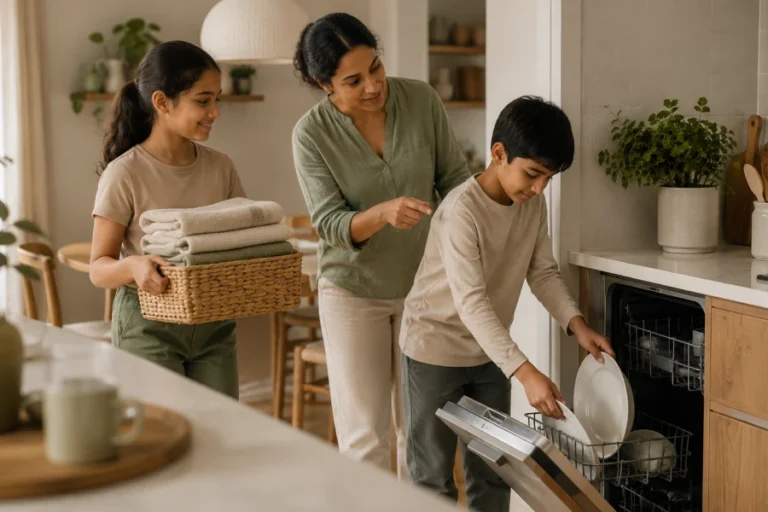
Free time rarely appears by accident after children arrive. Couples usually need to create it. That does not mean planning something elaborate. It may mean drinking coffee together before screens appear. It may mean folding laundry in the same room. It may mean a ten-minute porch conversation. A useful couples communication support approach helps partners use small windows well. The goal is attention, not performance. Presence can fit inside ordinary life. Parents need permission to count small moments.
Conflict feels sharper when everyone is tired. Small issues can become symbols of larger hurt. Staying connected with your partner during conflict means slowing the reaction. Couples can ask what the argument represents. Is someone feeling unseen. Is someone overloaded. Is someone lonely inside the routine. These questions soften defensive patterns. Repair should happen as soon as possible. A simple apology can reopen warmth. Respectful conflict teaches children something valuable too.
The relationship will not look exactly like it did before children. That change does not mean loss. It can become a deeper season. Couples learn endurance, humor, teamwork, and tenderness. A supportive marriage connection resource can help partners build that season intentionally. The strongest habits often feel small. Notice effort. Speak kindly. Protect one ritual. Repair quickly. Choose each other in ordinary minutes. That is where long-term closeness often lives.



Leave a comment